Florida Politics Embody How Black People Are Not a Monolith
Florida Politics Embody How Black People Are Not A Monolith — For Better And Worse [Op-Ed]
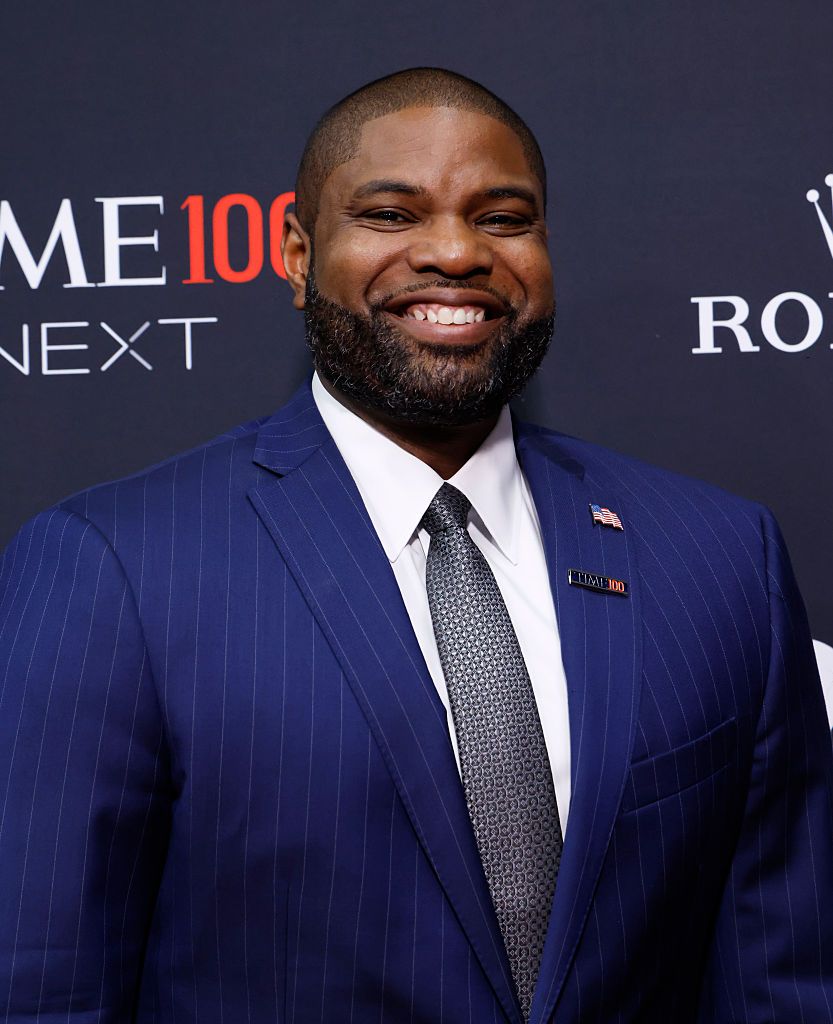
If you ever needed proof that the adage, “all skinfolk ain’t kinfolk,” is true, the race to the 2026 midterms in Florida stands as evidence.
Byron Donalds is attempting to do what Andrew Gillum couldn’t do back in 2018: become Florida’s first Black governor, but as a Republican. To put it nicely, Donalds makes Clarence Thomas look like Marcus Garvey. This is a man who thought the case against Trump for his mishandling of classified documents was “insane” because it “never made sense” to him why people were upset that his “friend” had boxes of top-secret documents stored in his shower. This is also a man who supports ICE and legitimately thought he had a shot at being Trump’s pick for vice president.
Donalds is the living and breathing version of Stephen from the 2012 film Django Unchained. Yet, surprisingly, he’s the favorite to become Florida’s next leader.
“I stand before a sea of conservative patriots who seek to take the reins of power from the progressive left,” he declared all the way back in 2010. Since then, he’s done and said whatever was necessary to work himself to this point, because as we know — if you want to skip the line in politics as a Black person in America, run as a Republican. “The payoff was huge. A month after President Trump returned to the White House in 2025, he backed Mr. Donalds to be the next governor of Florida, the president’s adopted home state, before he had even declared his candidacy,” read a report from the New York Times on Donalds’ ascendance in the GOP. “On Tuesday, Mr. Donalds, 47, easily captured the Republican nomination to lead the nation’s third largest state, making him the front-runner in the November general election against David Jolly, the Democratic nominee,” the report noted.
For a culture and community often forced to support each other despite individual missteps and flawed views, some see Donalds as caught between a rock and a hard place. Depending on one’s perspective, he might be seen as someone Harriet Tubman would have left behind or as “a brotha who is just doing what he has to do.”
Neither position is one that’s enviable or desired.
However, given the fight that we take part in to be seen as more than, Donalds is weirdly a necessity, as he serves as a paragon of our diversity.
On the other hand, Angie Nixon is on the doorstep of doing the impossible — winning a statewide election without a war chest and national name recognition as a Black female progressive Democrat in the South. The state representative from Duval County recently won the Senate nomination. Nixon is an underdog and a union organizer who ran a grassroots campaign and is up against a white female Republican incumbent as a double minority in a state with an unpleasant past.
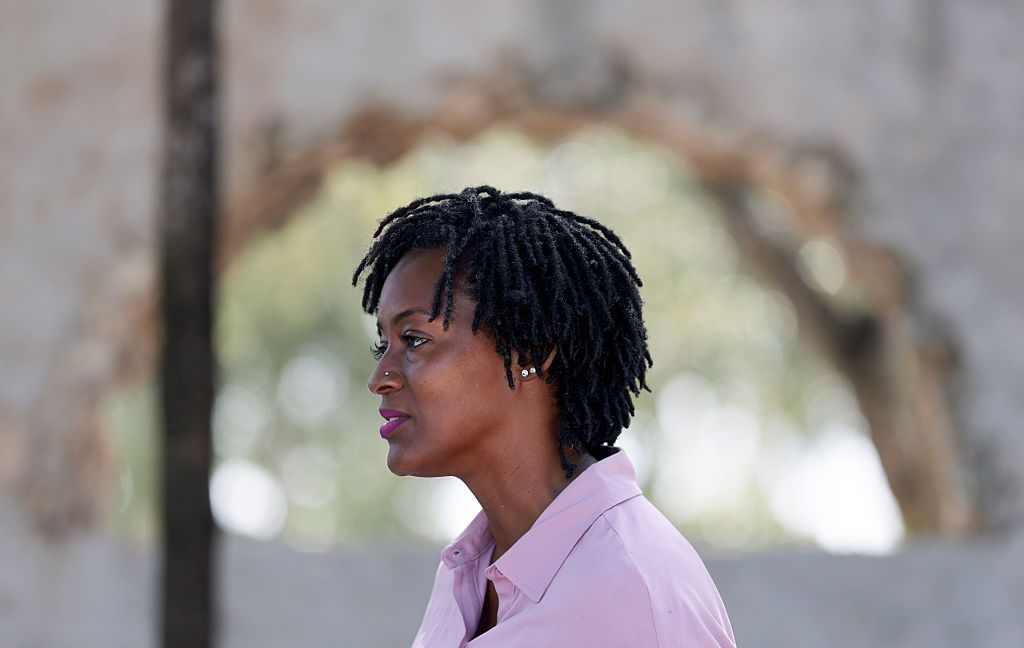
“They look at this movement, and they call us extreme, they call us radical, but I think people see through that,” Nixon declared after her victory, as her campaign slogan reads, “Change Can’t Wait.”
“I won’t let them define me, and I know you will always know where I stand,” she added. “If believing a mom shouldn’t have to work three jobs to keep a roof over her head is extreme, call me extreme. Ashley Moody (the incumbent) can call me whatever she wants, but in November she’ll be calling me senator.”
For all the hemming and hawing many Democrats have done during the Trump era, frustrated that their party doesn’t have a candidate willing to give Republicans a taste of their own medicine, Nixon checks those boxes in many ways. However, in a post-Kamala Harris world, while it’s refreshing to see a darker-skinned Black woman get to this point, it’s beyond reasonable to wonder if “they” will be willing to cast their ballots for her in November.
Because, as we know. Just because a Black woman is the best person for the job doesn’t mean she’s even guaranteed an interview.
“Is Florida ready for a democratic socialist candidate in a general election? I still don’t know the answer,” Aubrey Jewett, professor of political science at the University of Central Florida, recently told the Guardian about Nixon. “But what this primary showed was that, within the Democratic Party base, there is a strong majority of progressive social Democrats in Florida – just like there apparently is across the country.”
What Donalds and Nixon represent in Florida is taking place at a pivotal moment. It is impossible to talk about Black achievement in that state without mentioning and thinking of Gillum — and his past and current legal troubles — particularly when it comes to what Donalds is trying to accomplish. Florida is also home to one of the largest HBCUs, Florida A&M University, which was embroiled in controversy last year when Gov. Ron DeSantis’ ally Marva Johnson was appointed president despite boisterous opposition from the student body and alumni base, thus leading to her being deemed “MAGA Marva.”
The ideology surrounding which people and institutions deserve our grace and protection has always been an ongoing, contextual conversation within our community. We are even watching it play out in the media landscape with the debate about whether or not the National Association of Black Journalists was justified in giving ESPN’s Stephen A. Smith a “thumbs down” for his repeated negative commentary towards his own people, particularly Black women.
In a country where our image matters more and our representation has to be fought for, our willingness to “look out for each other” has become a necessity driven by survival instincts. However, just because the crusade for appreciation of the spectrum of our humanity continues, it doesn’t mean we have to support those who stand against us just because they look like us. Nothing represents that sentiment more than the opposing options Black voters in Florida will have on Election Day.
Carron J. Phillips is an award-winning journalist who writes on race, culture, social issues, politics, and sports. He hails from Saginaw, Michigan, and is a graduate of Morehouse College and Syracuse University. Follow his Substack to keep up with more of his work.
SEE ALSO:
Progressive Wins Senate Nom And More From The Florida Primary
Trump: Census Bureau Report Proves Noncitizens Voted In 2020 [Op-Ed]
Florida Politics Embody How Black People Are Not A Monolith — For Better And Worse [Op-Ed] was originally published on newsone.com


