10 Interesting Facts About Marcus Garvey's Pan-African Flag
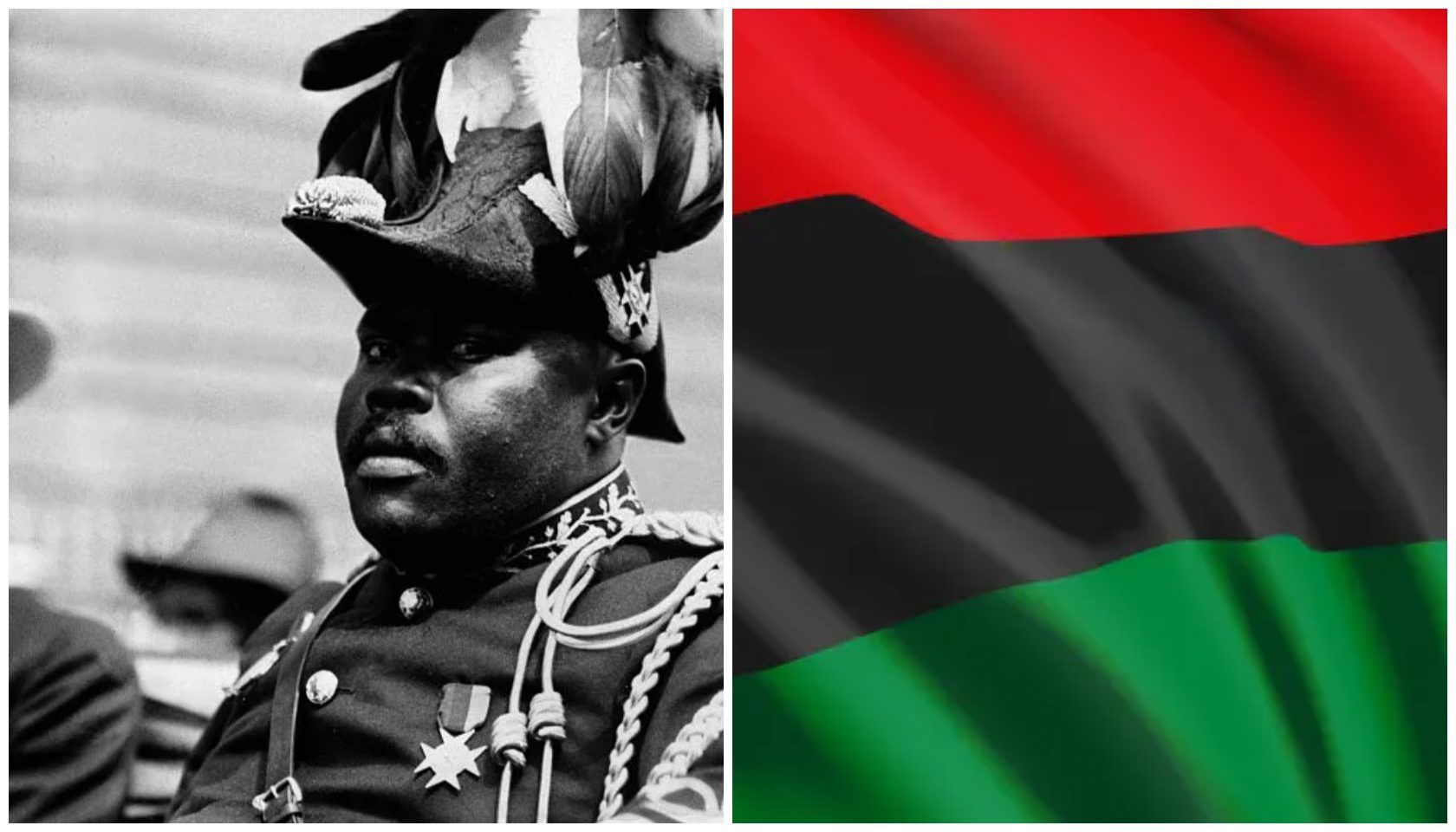
In commemorating the birthday of political activist Marcus Garvey, we also look at the influence of his red, green & black Pan-African Flag.
Share the post
Share this link via
Or copy link

At the center of the civil rights movement lies a handful of key players, and one that we owe a great respect to is political activist Marcus Garvey (1887 – 1940).
Founder of the Universal Negro Improvement Association and African Communities League, his work in creating an organization that could unite the entire African diaspora made a global impact so big that his ideologies became a movement in itself known as Garveyism.
As many commemorate Garvey’s would-be 139th birthday today (August 17), we wanted to look closer into the UNIA legacy by also reflecting on the symbol at the forefront of it all, the Pan-African Flag.
RELATED: The Power of Knowledge: Black Leaders Who Changed The Culture
Little Known Black History Fact: Marcus Garvey’s Attempted Assassination
Although the goal of Pan-Africanism seemed extreme in its efforts to unify all descendants of the country, the generational impact has been substantial. Now more than ever, the African diaspora is united in its global pursuit towards economic, social, and political progression. Black people are still borrowing aspects of Garveyism today, whether it’s taking pride in their African heritage or simply working towards a state of cultural independence. The flag is a prominent symbol in that expression, as many identify on a spiritual level to the red, black and green color palette that’s become synonymous with the movement.
Love K104 FM - DFW's Hip Hop and R&B? Get more! Join the K104 FM - DFW's Hip Hop and R&B Newsletter
We care about your data. See our privacy policy.
Red symbolizes the blood that flows through the veins of African descendants, green points to our rich land plus the country’s natural resources and black represents the people themselves. However, the vibrant hues only begin to tell the full story in how it became a household staple for African pride.
Keep scrolling to learn more about the Pan-African Flag that Marcus Garvey designed as a symbol for change that still resonates today amongst our people:
It’s Over 100 Years Old
Marcus Garvey designed the flag in 1920, taking inspiration from the black, brown and yellow vertical triband created three years prior in 1917 for The Liberty League of Negro-Americans flag.
One Of Many Flags Used to Commemorate Juneteenth
While it might be the preferred choice when Juneteenth comes around, the Pan-African flag isn’t the only one you’ll see during the holiday. In addition to the official Juneteenth flag created in 1997, the African American Flag and Black American Heritage Flag are also equally important to the culture.
Created In Response To Racism In The Form Of A “Coon Song”
As history states, Garvey was inspired to create the flag to defy the deplorable lyrics of a hit song from 1900 titled “Every Race Has a Flag but the Coon.” 20 years later, he transformed his anger into a symbol much more powerful.
An Influential Design Throughout Africa
Many national flags have adapted inspiration from the Pan-African Flag, including Kenya, South Sudan, Malawi and Martinique amongst others.
The Symbol Of Universal African Flag Day
August 17 has for many become an annual celebration of not only Garvey’s birthday but the flag itself, seen as an act of global solidarity.
Inspiration For The Kwanzaa Bendera Flag
At quick glance they may seem identical, but the Bendera created in the 1960s differs in its intentional rearrangement of the colors. Black is brought to the forefront to symbolize that we as a people come first.
A Flag Of Many Names
If you’ve been calling the Pan-African Flag something different all this time, chances are you might not be wrong. Alternate aka’s include the Black Liberation flag, the RBG flag, the Afro-American flag and in some cases simply as the Marcus Garvey flag.
A Symbol For Change During Modern Times
The flag played a major role in response to the 2014 unjust police shooting of Michael Brown in Ferguson, Missouri, when a Howard University student changed the campus flagpole from a U.S. flag to the red, green and black in order to show solidarity.
Sometimes Black, Sometimes Yellow
While red, black and green is the prime color combination, the Pan-African movement is also recognized by a secondary pattern that replaces the black for yellow or gold. It has become quite synonymous with many African nations.
The Pan-African Influence On Pop Culture
Beyond standing as a symbol for unity amongst all African people, the color combo admittedly makes for a fashion statement that has impacted the worlds of music, film and style, particularly hip-hop culture.
10 Interesting Facts About Marcus Garvey's Pan-African Flag was originally published on blackamericaweb.com